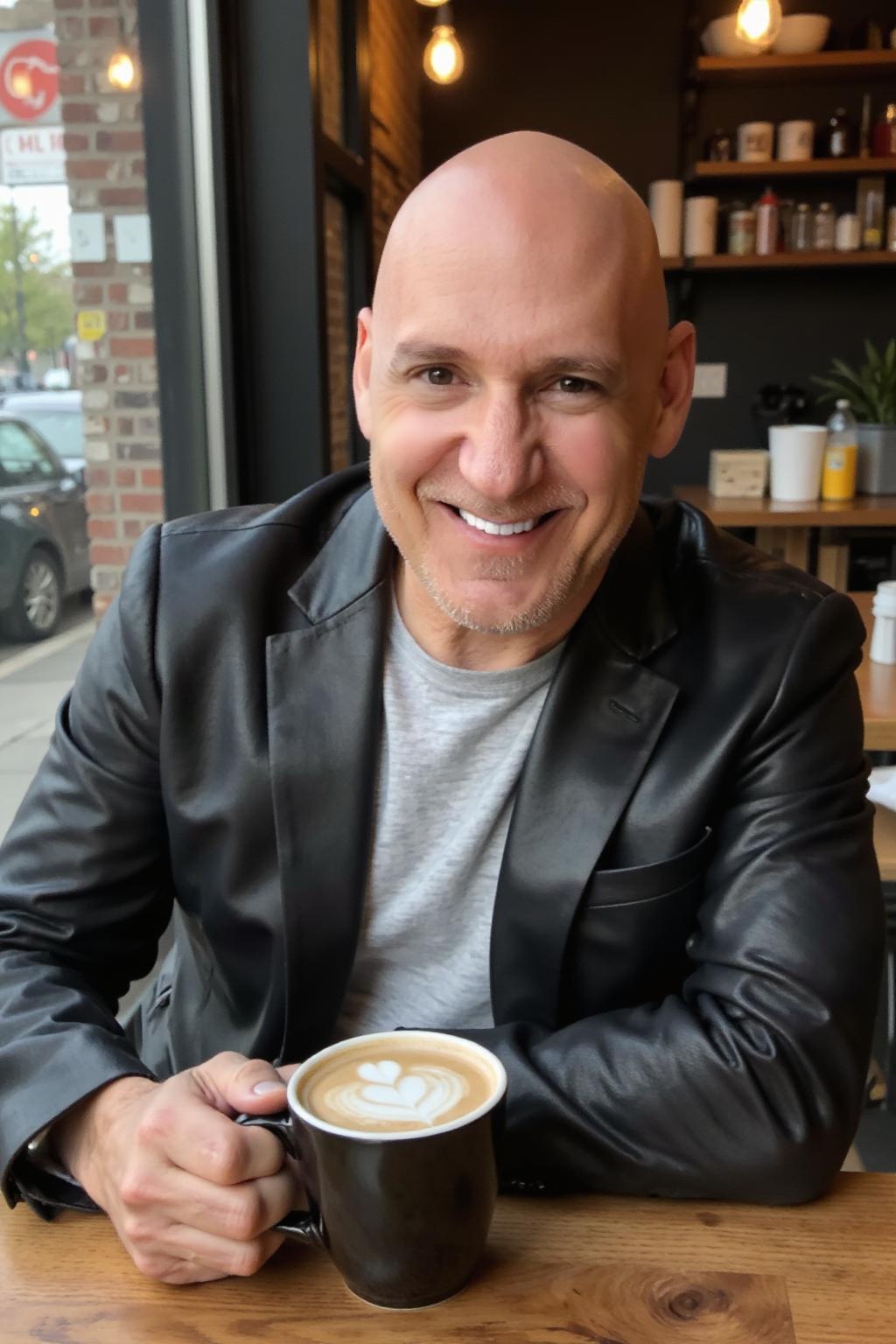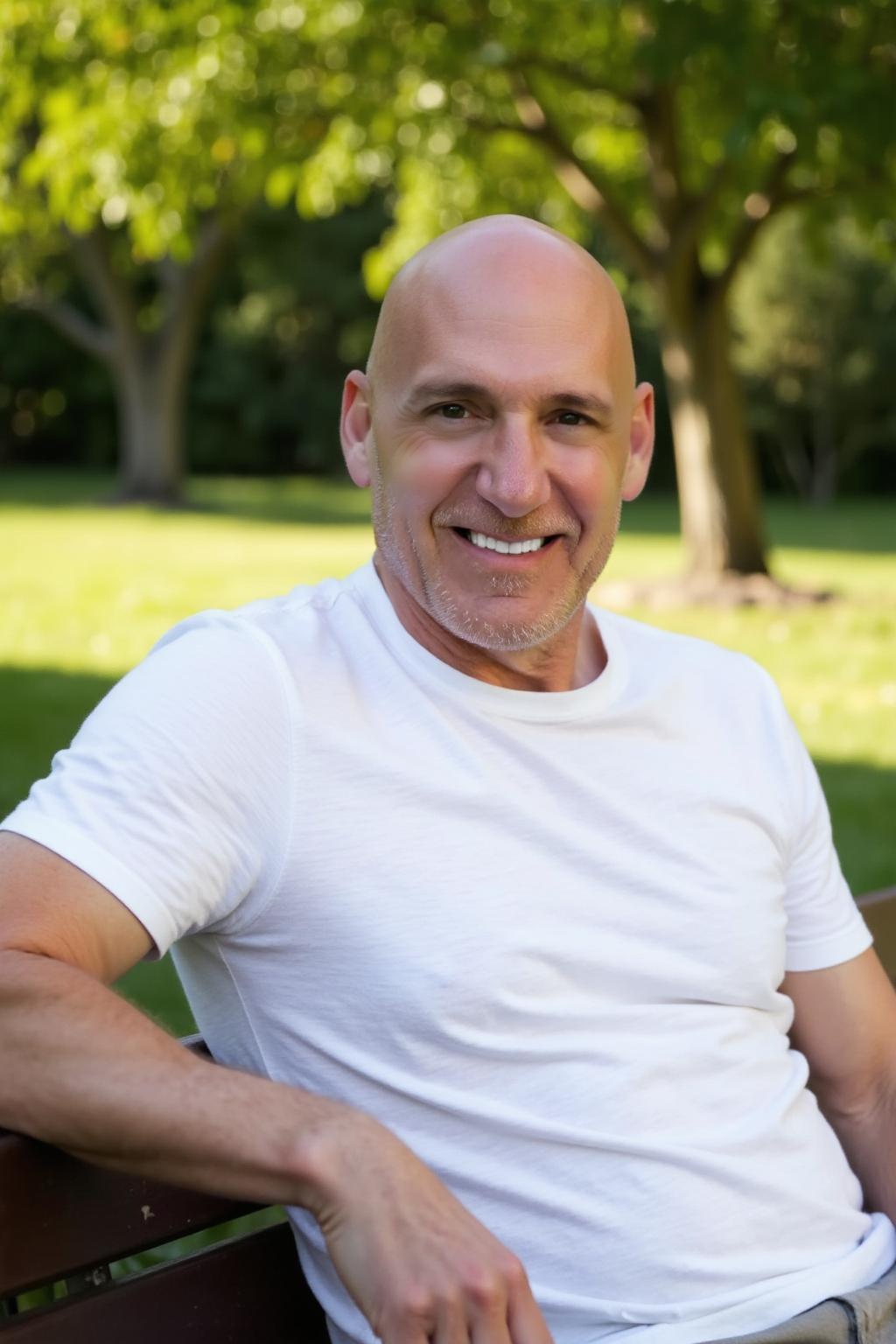
Ivan's story, chapter by chapter.
I destroyed the best thing I ever built.
Not in one moment. Over years. One deliberate, avoidable choice at a time. And the thing that terrified me most — when I finally stopped long enough to look — wasn't the wreckage. It was that I hadn't felt much while I was making it.
Most men over fifty have spent their whole lives being competent at everything except themselves. I could run a plant, read a room, handle whatever came at me. I'd been in brawls, rolled cars, walked away from a plane crash. But feel something all the way through?
Nobody ever taught me that. And I never taught myself.
This is what it took to change that. And why I believe it's possible for you too.
I came along seventeen years after my brother and sister. One little boy, and nobody had time for him.
My parents gave me what they could. Sports. Activities. A roof. My mom worked two jobs. My dad worked hard. What was missing wasn't things — it was presence. And when you're a kid, presence is the whole world.
I remember waiting in the backseat of my dad's car outside a bar. How long, I don't know. How many times, I can't say. I remember the times he took me grouse hunting — how enormous those days felt precisely because they were so scarce. When we played catch, I'd throw a wild pitch over his shoulder and sprint after it myself before he could move. I didn't want anything to give him a reason to stop.
A kid doesn't think 'they're busy.' A kid thinks 'I must not be enough.'
When the bullying started in my early teens, that feeling hardened into armour. Then came the day my father had to walk into an arcade and face down the group that had been terrorising me — while I sat in the car with my mother.
I felt one thing. Shame.
I made a vow right there that nobody would ever have to rescue me again.
I don't remember a lot of my childhood. That in itself says something.
My mom and dad did the best they could. I believe that. But there were a lot of wooden spoons, a lot of spankings — and a constant undercurrent of not enough. Not good enough, not doing enough, not being enough. My mom would say "you should do this" or "you should do that," and I could never quite land on the right side of her approval.
My grandma was a hard, mean woman. My mom carried some of that. She tried to be loving — I could see her trying — but I didn't feel the kind of love I now give my own kids. That's not blame. It's just the truth.
My parents played poker every weekend with friends. My dad would get drunk — not mean, not violent, but drunk enough that he and my mom would end up in these awful, escalating fights. I remember coming out of my room and grabbing onto one of their legs, begging them to stop. My dad never laid a hand on my mother — I want to be clear about that. But the fighting was real, and so was the fear in that little boy clinging to their legs in the middle of the night.
The spankings were real too. Wooden spoons, steel spoons, bare hands. I was terrified of my mother. And yet I carry no resentment toward her — I mean that genuinely. She did the best she could with what she was given, and what she was given wasn't much better. I love her. I miss her. She was a product of her own wounds just like the rest of us.
My dad was a wonderful man. Everyone who knew him loved him. But he wasn't around much — always working, always busy.
I miss him deeply. It's impossible to fully comprehend the size of someone's absence until they're gone.
I became a rebellious teenager. Trouble with the law, trouble at school, always pushing, always loud, always needing to be the center of attention. Looking back, that little boy was just starving for someone to notice him.
When you come along seventeen years after the twins, the math is pretty clear. I wasn't exactly planned.
I've spent a lot of my life in survival mode. This is just where it started.
I became a scrapper. Fought from fourteen into my forties. Spent occasional nights in jail, wrecked more cars than I care to count, did some rodeo high on cocaine and whiskey, and walked away from cartwheeling a Cessna 185 down an airstrip.
That's how a man who doesn't know what to do with his pain builds a life. Loud. Fast. No brakes.
A lot of the trauma I carry today started in grades seven, eight, and nine — the years I was bullied.
The very next time that same kid came at me, I looked him dead in the eye and said, "Let's go. Right now." He backed down. The feeling that rushed through me was pure euphoria — something I'd never felt before. Not long after, I got into my first real fight. I won. That feeling hit again, even stronger.
It became an addiction. Then it became an identity.
I grew up in Quesnel and Fort St. John — two hard towns. Being the tough guy felt like safety. I fought every weekend. I fought people bigger than me, which was most people. I think I won so often because I fought scared — and scared men fight dirty. When I was in it, there was no halfway. No mercy. Kick them when they're down. Fight like it's kill or be killed — because in my nervous system, it always was.
I'm sixty-three now. I don't fight anymore. But the wiring is still there. A few days ago, someone at work disrespected me and the rage that surged through my body was instant and total — that same old adrenaline, that same animal readiness. The same feeling from forty years ago.
I ended up in the bathtub, talking myself down. You're safe. You don't have to fight. You can come from love. Rachelle helped me find that softer ground. I went and talked to the guy. He apologized. We worked it out peacefully.
But it's work. Every single time, it's work.
The scrapper kept me alive. He served his purpose.
Now I'm trying to thank him and let him rest — and that's one of the hardest things I've ever done.
I was sixteen and put my parents through hell on a regular basis. This particular day, my friend and I were heading to the ski hill. My dad had told us to take his little Toyota pickup. But we were meeting girls out there, and we wanted to arrive in something that looked cool.
So we took my mom's Dodge Dart instead.
On the way out, we spotted two girls from school in a car with their father, headed to the same hill. We blew past them — way too fast for the conditions. The car spun instantly. Sixty miles an hour, now going backwards. All we could do was watch blue sky roll past the windows, over and over, as we tumbled down the hillside and onto a frozen lake.
When it stopped, the car was upside down on the ice. Skis and boots were scattered everywhere from the trunk blowing open in the roll. We crawled out through the broken windows, looked up the hill, and saw the two girls and their father staring down at us in horror.
We looked at each other — and started laughing.
The father loaded the girls into the car and drove away. Can't blame him.
We climbed up the bank in our running shoes and walked in the bitter cold to a small acreage down the highway to call a tow truck. When it arrived, the driver hauled the car back up, we threw the skis and boots back in the trunk that wouldn't close, and then kicked the caved-in roof back out enough to sit inside.
We drove to the ski hill anyway. We were already in trouble — might as well ski.
We had our goggles on because there were no windows left. The car was smoking the whole way because the tow truck driver had left the emergency brake on and we were too stupid to notice. We drove the rest of the way with it on, rolling into the ski hill parking lot — no windows, roof caved in, vehicle nearly on fire.
A neighbor spotted us pulling in and just shook his head. "Oh fuck. Here comes Demers."
My mom banned me from driving any of their vehicles until I completed a defensive driving course. I took it reluctantly — only because it was the only way to get my privileges back.
Not long after, I bought my first car. My sister's Dodge Duster. Blue with a white racing stripe. I loved that car.
I totaled it not long after.
There were a lot of wrecks over those years — some my fault, some not. The fact that I'm still standing is something I don't take lightly.
We were heading out on a sheep hunting trip — me, my best friend, and a couple of others. Before flying into the backcountry we were doing touchdowns on the airstrip, testing the weight of the plane. The pilot wasn't happy with how heavy we were, so we pulled some gear out. Second run felt much better.
The plan was simple. Two of us would drive the pilot's truck up to Toad River with four barrels of avgas while the pilot and another guy flew in to meet us. We were finalizing all of this in the air, on the way back to land at his private airstrip on the Peace River right by his house.
As we came in to land I noticed the nose dip. Something felt wrong.
The plane flipped. Started cartwheeling down the airstrip. It came to a stop upside down, wheels still spinning, dust everywhere, no windows left.
We undid our seatbelts and dropped to the ceiling. The smell of avgas hit immediately. Randy said, "Let's get the fuck out of here." We scrambled out through the broken windows and met at the front of the plane, wheels still turning above our heads.
Randy looked at the wreck. Then he looked at me.
"Tell me that just didn't happen."
He kept saying it. Over and over.
Then something shifted in his face. He reached down, picked up a clump of dirt, and started kicking it onto the plane — just like a baseball umpire dusting off home plate.
"I didn't like that fucking piece of shit anyway." He turned around. "Come on. We gotta go find another airplane. We're going sheep hunting in the morning."
He got on the phone right there and started calling around looking for a plane to buy. I stood there watching, bewildered. I was a small town kid from Fort St. John. I had never been around money like that in my life.
Turns out he was part owner of a northern airline company. He had a pilot fly him to the Yukon where he'd already spotted a plane, bought it on the spot, and waited for the check to clear. That took about four days. My friend and I sat up at Toad River waiting.
Eventually he came buzzing in low over the trees in an A&W root beer colored plane, cool as you like.
We went sheep hunting. Had a great time.
Just another Tuesday.
For twenty-seven years I worked in northern BC — a pulp mill, then a gas plant. Those were the best years of my working life. Not because of the work itself, but because of the people I stood with. A community built over decades. The kind of belonging that doesn't need explanation, just presence.
I have two daughters I love more than anything. I never missed a recital or an event. I pulled them out of school to sit in deer blinds together, eating junk food, telling stories, watching the tree line. My youngest was a natural — steady hands, patient, good eye. My oldest wasn't there for the deer. She was there for her dad. And the candy.
But there's a way a man can be physically present and emotionally unreachable.
I provided. I protected. I performed. And there was a gap forming in my marriage — quietly, slowly — where the intimacy used to be. She did everything right. I'm the one who fucked it all up.
We transferred to Calgary. I left behind every relationship that had ever grounded me — the men, the land, the hunting, the fishing, the wide open country where I went to feel like myself — and landed in a concrete jungle running a pipeline from a city skyscraper. The community I'd spent twenty-seven years building was gone overnight. So was the nature that had always kept me sane. I had no idea how much of my identity had lived inside both.
A few years later, a psychologist told me if I didn't quit my job I was going to die. Not a metaphor. She meant it medically. Extreme burnout. Depression. Anxiety. My body had been sending signals for years that I'd been overriding with work and noise and motion.
I changed careers. Chose real estate. And walked straight into the worst decision of my life.
The affair that followed wasn't about the other woman. It was about a man who'd lost his footing and had no idea how to say so. Several months in, I sent a text meant for her to my wife instead. That was the end. I didn't just leave when it came out. I threw a grenade in on my way out. My daughters found out everything. That's a particular kind of heavy that I'll carry for the rest of my life — and have chosen to carry honestly.
The armour that kept you alive at fifteen is the same armour that keeps you numb at fifty-five.
That's when the body started keeping score.
What you bury doesn't disappear. It goes deeper and gets heavier. And eventually — one way or another — it comes out.
When the affair was over I needed a different distraction. I was already numbing myself with booze. I quit real estate, went back to the patch, and filled every empty hour with noise and motion and women. Three dating apps running at once.
Every one of those choices made the hole bigger, not smaller. The thing I was using as medicine was poison. I'd spent forty years running and I was more empty than when I started.
That's when I finally understood something. The loneliness I felt in Calgary wasn't new. It was the same loneliness that had been there since I was a kid — sitting in the backseat of my dad's car outside a bar, waiting, wondering why I wasn't worth coming back for.
I'd just never stopped moving long enough to feel it.
So I stopped.
I got off the dating apps. Quit the bar scene. Went home. Stayed home. Sat with the silence I'd been running from my entire life.
I picked up a book. Then another. Started going to retreats. Sitting in rooms doing work I'd have laughed at ten years earlier. Breathwork that cracked me open in ways that decades of white-knuckling never could. Plant medicine removed layers from a perception I didn't even know was tainted.
One day I came home from work and realised I was looking forward to walking through my own door. For the first time in maybe ever, I enjoyed being alone.
I was finally good company to myself.
Then came Costa Rica.
A retreat. A circle of men I'd never met — several Navy SEALs, an MMA fighter, a bull rider from Calgary. The most physically and mentally hardened human beings I have ever shared space with. Men trained to operate in conditions that would break most of us before breakfast.
Every single one of them wept.
That hit me like a freight train.
All those years I'd told myself that feeling was weakness. That real men cowboy up. That the armour was the point. And here were the hardest men on earth showing me that what I'd been protecting myself from my entire life — was actually the work.
I am more physically alive now than I was at forty. Not despite my age — because I finally stopped fighting my body and started listening to it. What it needed wasn't punishment. It needed the same honesty I was finally learning to bring to everything else.
And everything else was waiting.
I rebuilt the relationship with my daughters one honest conversation at a time. They never stopped loving me. But I had to learn to receive that love without the shame drowning it out. Sitting across from two women who loved me despite everything I'd put them through — and letting myself believe I deserved it.
That was harder than any fight I ever won.
My girls and I have never been closer.
I spent close to forty years as a Power Engineer. Pulp mills, gas plants, petrochemical plants, power plants, pipelines. It built a man with hard-earned knowledge about how pressure builds, how systems fail, and what it takes to keep something running when everything around it is trying to break down. It turns out that knowledge applies to more than plants.
Somewhere in those last years the passion left. Thirty-something years of night shifts and industrial noise will do that. But I didn't know what was supposed to replace it. That question — what now? — is one of the loneliest questions a person over fifty can sit with. Everything you used to define yourself is either gone or going. And nobody prepared you for the silence that follows.
I sat in that silence for a long time.
When I was ready, I met Rachelle.
We were both already on the road back to ourselves — not lost anymore, not fully found either. What we discovered was that even after all the inner work, we could still trigger each other into the oldest, most unhealed parts of ourselves. Once we understood that our triggers were our own unfinished business — and had nothing to do with the other person — that was the moment everything shifted. You can't unsee it.
We married in August 2025.
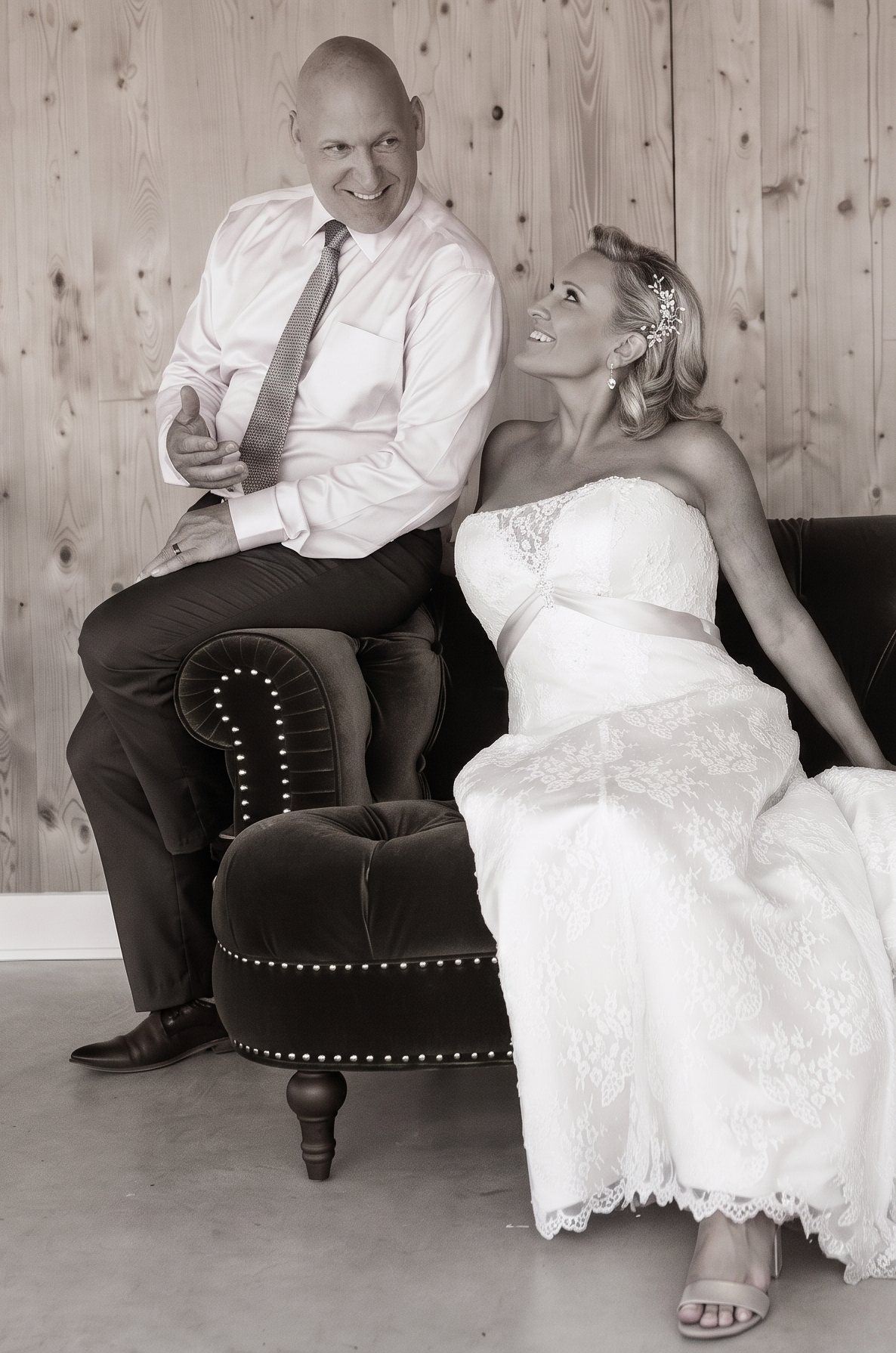
And we built Alchemize Your Life After 50 together — not because we had it all figured out, but because between us we had 116 years of actually living it. The wreckage and the rebuilding both.
There are people who need someone a few steps ahead of them on the same road — not a guru on a stage, but a guide who's been through the fire and is still in it.
That's what we are.
Rachelle brings her own road to this — her own rebuilding, and years of deep work in somatic therapy, breathwork, and energy healing. Together we lead retreats, workshops, courses, and coaching for individuals, couples, and people who just know something has to change but haven't yet found the language for what.
We are not finished products. We are still doing the work. It continues until we draw our last breath. That's not a disclaimer. That's the point.
The second half of life isn't the part where you wind down. It's the part where you finally put down what you've been carrying — and build something that was always meant to be yours.
If any of this landed — if you recognised yourself in it, or someone you love — you might be exactly who we had in mind when we built this.
For the man who provided everything and still feels empty. For the woman who was strong for everyone else and has nothing left. For the couple whose connection quietly disappeared somewhere along the way. For anyone who built a life around a career, a role, an identity — and is now standing in the silence asking who am I without all of that, and what am I supposed to do with the next thirty years.
Your best chapter isn't behind you. It's the one you haven't written yet.
Alchemize Your Life After 50 | Your best chapter starts now.