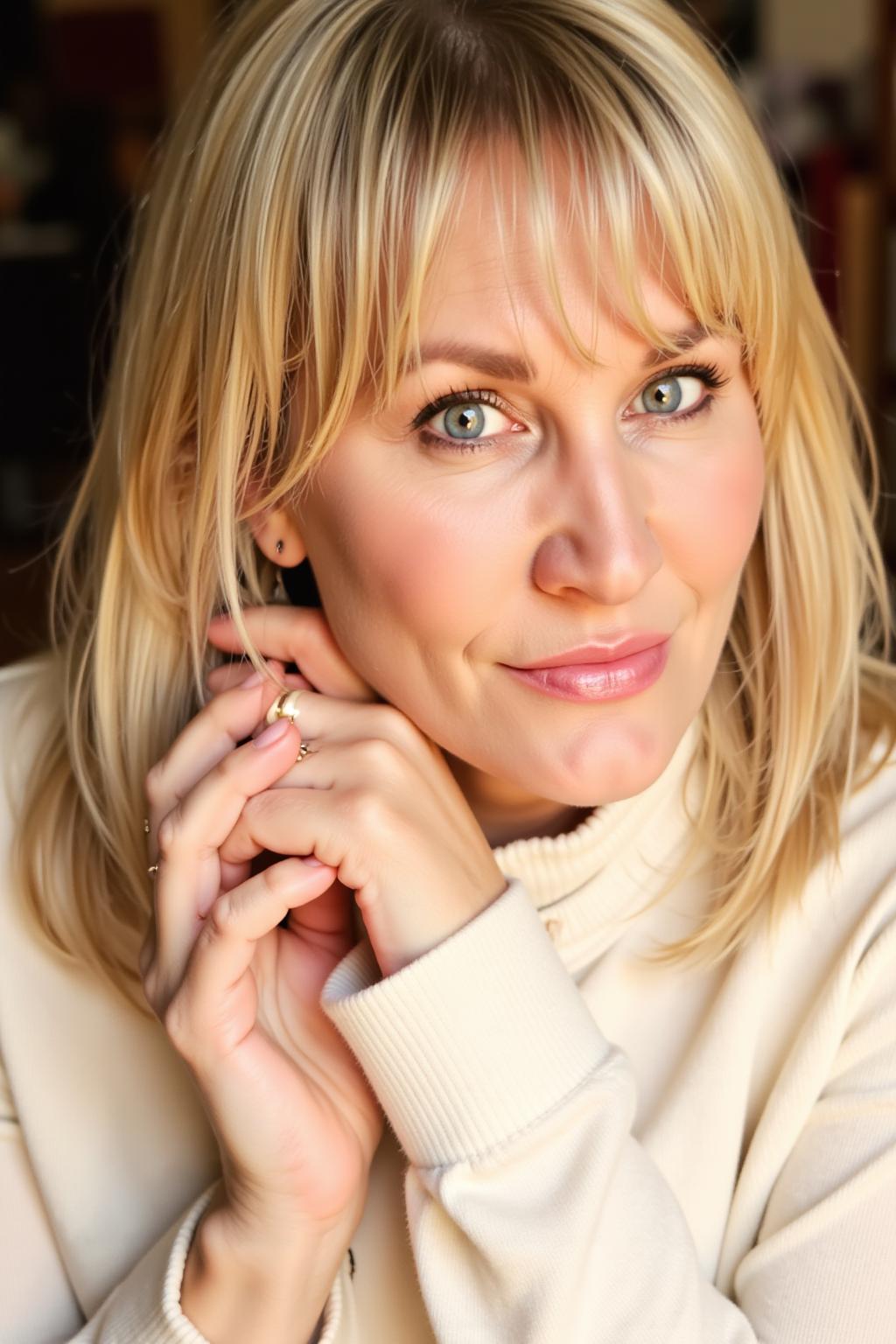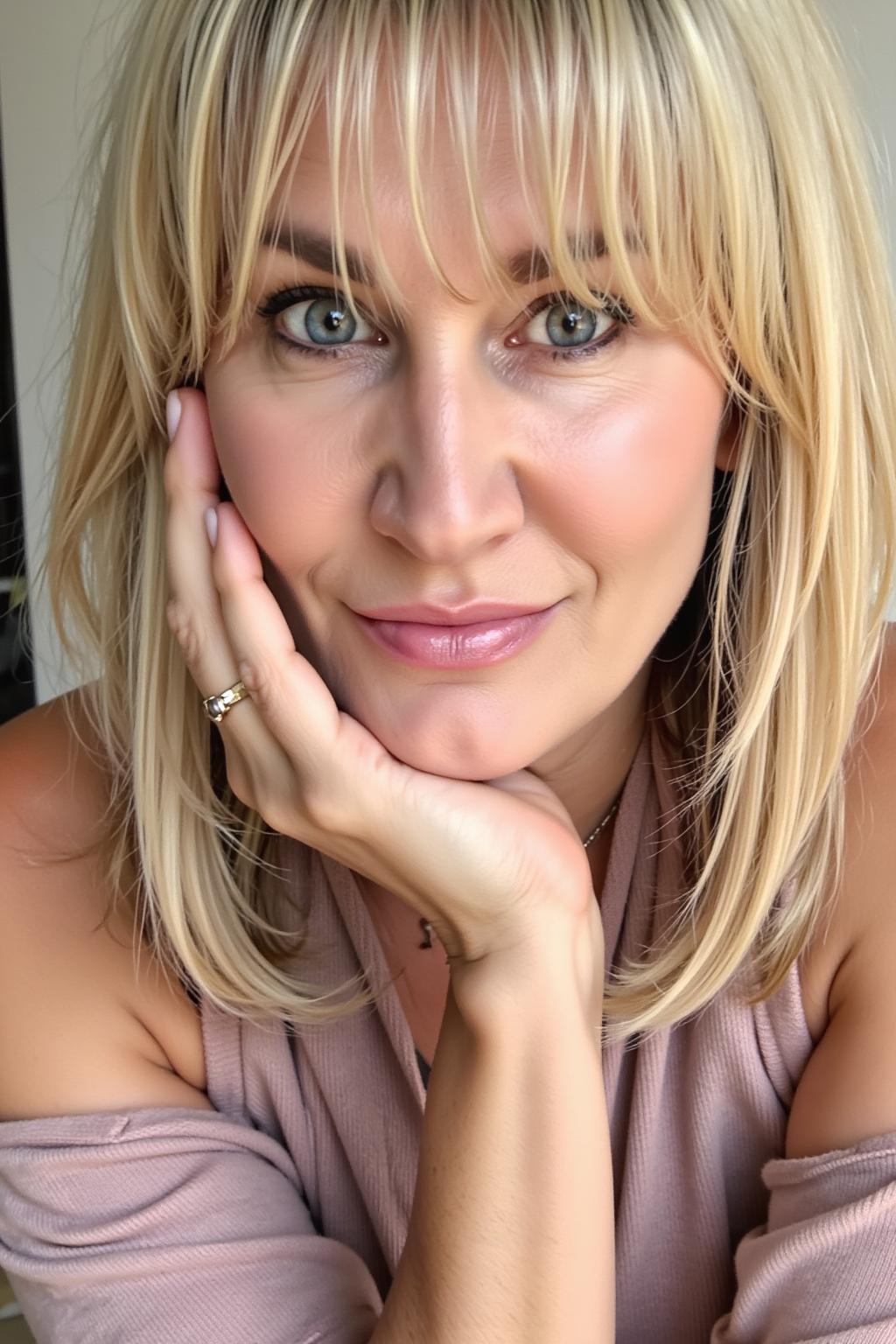
Rachelle's story, chapter by chapter.
You already know something's underneath. You've known for a while.
It shows up at 2am when the house is quiet and there's nothing left to manage. It shows up in the pause before you answer 'I'm fine.' It's been there through every habit you've built, every program you've finished, every framework you've learned to speak fluently.
None of that was wrong. None of it was enough either — because what's underneath isn't something you can think your way past. It has to actually be worked.
That's not therapy. That's not another program. That's alchemy.
I was given away before I learned to walk.
Not in anger. Not in hatred. In overwhelm. My mother was sixteen. My father was sixteen. I was a baby who cried alone in the bush, and there was no one to help her carry it.
That should be the beginning of a tragedy.
It isn't. But it took me five decades to understand why.
I was placed in an Indigenous orphanage at age one. My grandmother visited every week — she always found me, she said, because I was the only blonde-haired, blue-eyed child there. One week she came. And I was gone.
Without my mother's consent, I had been sold to a family in the United States.
I lived there for four years. I have no conscious memory of it. But my body does. Because here is what I believe, from the deepest part of myself: I was loved there. Held. Wanted. Comforted. My nervous system learned — before I could form a single memory — what safety felt like.
And then it was taken away.
When I was five and a half, my biological mother found me and won me back through a lawyer. I was flown to Canada and handed to a group of strangers.
'This is your mother. These are your sisters. This is home.'
I didn't know these people. When my mother tried to hold me, I pulled away and blew on my arm where she had touched me. My body already knew: caregivers disappear. There is no such thing as staying.
That knowing shaped the next fifty years.
The house I was brought into was not a safe one.
My father struggled with alcoholism. My mother was emotionally and mentally unstable — a sixteen-year-old who had lost her own father's approval, her own safety, her own girlhood. She told me I had ruined her life. She told me my biological father didn't want me. She told me I was the worst thing that had ever happened to her.
I believed that story for decades.
My nervous system learned to read a room in seconds. To shrink before anyone asked me to. To stay quiet, be useful, take up as little space as possible. I volunteered to read to kindergarteners at recess not because I was kind — I was — but because it meant I didn't have to go outside where the bullying was. Being useful felt safer than being visible.
The fire came when I was in Grade 5. One week before Christmas, our house burned to the ground. I stood outside at three in the morning in flannel pajamas, watching everything we owned disappear while we waited for the fire trucks to arrive. We moved into a motel — all of us, one room — and stayed for nearly a year. Starting over didn't feel hopeful. It felt familiar. I had already learned not to attach.
When I was around ten, my mother disappeared. We were told only that she was 'ill.' No explanation. No timeline. My stepfather worked twelve-hour days in construction. And I stepped in.
I cooked meals. I did laundry. I cleaned the house. I helped with my sisters' homework. I got everyone on and off the bus.
I was ten years old, and no one was taking care of me.
At fourteen, my mother accused me of stealing money I had not stolen. My stepfather came home and struck me across the face. My mouth split open. Blood ran into my hand. I didn't cry from pain. I cried from the shock of telling the truth and still being hurt.
I packed what I could into a garbage bag.
My mother told me if I left, I could never come back. I left anyway. I walked for hours to a payphone. I eventually told my guidance counselor the truth. Social services found me housing.
That moment — a girl with a garbage bag and a split lip, choosing the unknown over the familiar — turned out to be the first act of self-love I ever performed, though I didn't have that language then. I just knew that staying meant disappearing. And something in me refused to disappear.
I spent the years that followed becoming someone no one could leave behind — capable, fierce, indispensable. I didn't know that was still the wound talking.
I became a mother at twenty-seven.
My son was born premature — two and a half pounds. He spent two months in the ICU before coming home at just over five pounds. I became the woman who learns, who advocates, who stays awake, who figures it out. There was no room to fall apart. So I didn't.
My body had already started sending its own signals. A lump in my left breast in 2002. Surgery. Half of my left breast, gone. Years of quiet grief about that — about femininity, about what I thought had been taken from me, about what the scars meant. My first husband was cheating. I carried the wound privately, as I had always carried everything, and told myself it was fine.
It wasn't fine.
When my son was diagnosed with autism at seven, the world offered sympathy and a waiting list — as if a diagnosis was a sentence instead of a starting line.
I didn't accept that. Nobody had built a life for a kid like him, so I stopped waiting for permission and built it myself. I sat in rooms that were never designed to teach someone like me, and I learned anyway. I created what didn't exist. I pushed back on every institution that treated 'there's nothing available' as an answer instead of a failure — founding pilot sports and recreation programs for children with disabilities, because my son deserved a life with room in it. Room to belong. Room to be independent. Room to be whole, not managed.
That refusal never ended. It just quietly became the way I love — in everything I've built since, including this.
While I was pregnant with my daughter, I was in a serious car accident. My pelvis dislocated. My shoulder dislocated. A disc herniated in my neck. My son was four years old in the backseat and walked away with small neck injuries. I was admitted to the ICU in Toronto and stayed for four months, going into labor almost every day, fighting to keep my daughter inside long enough to live.
In that hospital bed, in that particular stillness that only comes when the body finally forces it, I told myself the truth for the first time in years.
I had chosen my marriage from a wounded place. I knew he was cheating. I knew the shape of what I was living in. And I had recreated — without meaning to, without knowing — the exact structure of the home I had escaped at fourteen.
I made a deal.
If she lives — I will leave him.
If she lives — I will love myself enough to stop this pattern.
If she lives — I will not raise my children inside the same lessons I was raised in.
She lived. She was born on May 14, 2005. Today she is becoming a recreational therapist for seniors — a woman of service, a woman of presence. She became the woman I prayed she would have the chance to become.
I kept my promise.
I packed my two children — my son with autism, my daughter still new to the world — and moved across the country to British Columbia.
I arrived with Prada heels. I learned quickly that life on the coast required rain boots instead.
So there I was — heels traded for boots — ankle-deep at a sturgeon farm, giving conservation tours, explaining why ancient fish matter, quietly rebuilding a life. One minute I was in boardrooms talking strategy. The next I was hoping I wouldn't fall into a tank.
The heels didn't survive. I did.
None of that was a lie. But none of it was the whole truth either.
Then the body asked for a reckoning.
A second small lump appeared — benign, but the surgery to remove it would take what little remained of my left breast. My surgeon suggested a double mastectomy and reconstruction. I was terrified. The trauma of 2002 lived in my body, not just my memory. Every scar had a story. Every nerve ending held the old grief.
The night before the surgery, I stood in the shower and scrubbed my body as instructed — and something cracked open. Tears came. Not small tears. An hour of tears, running down my body and down the drain, carrying decades of pain I had named feminine identity, self-worth, desirability, survival. Years of telling myself I was less than. Years of hiding in T-shirts. Years of believing the scar was a verdict.
What I understood in that shower, and what the surgery confirmed: my femininity was never in my body's surface. It was never in what could be removed. The beauty, the aliveness, the feminine energy — it was inside. It had always been inside. The surgery didn't take something from me. It returned me to myself.
Feel. Reveal. Release. Heal.
I had been living this process long before I had words for it.
That same willingness to stop running — to finally sit with what was real — brought me to a retreat in Costa Rica.
Held by nature, by silence, by the kind of shadow work that doesn't let you look away, I met the parts of myself I had been outrunning my entire life. The grief. The rage that had nowhere to go. The tenderness I had mistaken for weakness. The little girl who had packed her life into a garbage bag at fourteen and never really stopped moving.
I received something in that jungle. A knowing. A remembering.
That what I had lived was not random. Not punishment. Not proof of anything the cruelest voices in my head had ever suggested.
It was initiation.
Every rupture, every reckoning, every season of beginning again — it had been turning something in me. The way heat and pressure turn lead into something else entirely.
Not from a textbook. Not from a certification — though I earned those too, as a Certified Trauma-Informed Coach, Certified Somatic Breathwork Facilitator, Reiki Master, Energy-Based Somatic Therapist, and Certified Sylvotherapy Practitioner. The framework emerged from the lived truth of what had actually worked in my own unraveling: Feel what you've been avoiding. Reveal what's underneath the behavior. Release what no longer belongs to you. Heal into who you actually are.
In 2021, I founded Alchemy Wellness Group — and watched again and again, in others, what my own body had taught me.
Healing is not about fixing what's broken. It's about reclaiming what was lost.
The inner work doesn't immunize you. Even after everything I had learned, every time we had a disagreement and he needed space, the terrified girl inside me rose up. My body would tremble. I would feel the panic of a woman who had spent her whole life being left — and had spent both of her marriages choosing, without knowing it, from that same wound. Looking for someone who wouldn't disappear. Not yet knowing how to choose from wholeness.
Every single time.
And instead of disappearing — he stayed.
For the first time in my life, I experienced a man who could stand in the fire and say: I love you. I see you. I'm not going anywhere. And hold that space while my nervous system caught up to the truth that love doesn't have to end.
Through him, I am still learning — slowly, tenderly — that space is not abandonment. That conflict is not disappearance. That love can stay.
We married in August 2025.
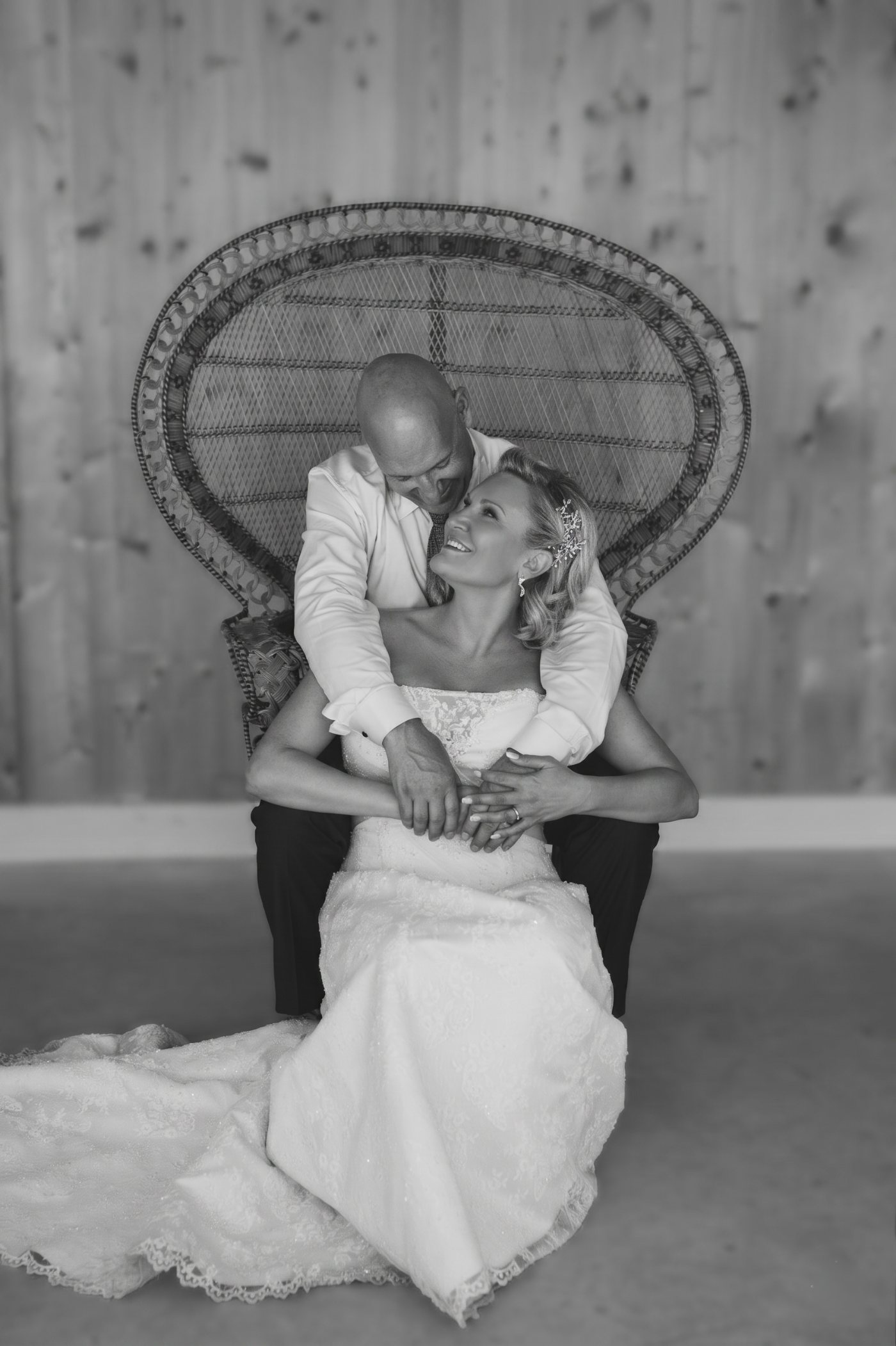
And together we built Alchemize Your Life After 50 — not because we had finished the work, but because between us we had 116 years of actually living it. The wreckage and the rebuilding both.
My son is learning to navigate adulthood with the challenges that will be his for life. My daughter is becoming the woman of service I prayed she would have the chance to become. I live in my body differently now — not as a place I push through, but as a home I have finally stopped leaving.
The abandonment wound is still in me. I won't pretend otherwise. But it no longer runs the show. Because healing abandonment doesn't mean no one ever leaves.
It means I don't leave myself when they do.
The things that cracked me open — the baby given away, the girl with the garbage bag, the woman in the ICU bed making deals with God, the hour of tears in a shower the night before surgery — none of it was random. None of it was punishment.
It was the raw material.
And that is the work I do now, alongside Ivan — for women who have spent their whole lives being the strong one, the capable one, the one who kept it together, while something quieter and truer waited beneath. For women who know they are not finished. Who sense that the second half of life is supposed to mean something, but can't quite hear the signal through the noise.
You don't become yourself by fixing what's broken. You become yourself by returning to what was always true.
Alchemize Your Life After 50 | Your best chapter starts now.